08 de June del 2026
Brand love isn’t the goal. It’s what happens when you get something else right.
Why Coca-Cola changed the question—and what it means for brands that are still measuring love when they should be measuring behavior. 8 minutes read
There are brands in Costa Rica that people say they love. They say it in focus groups. Surveys confirm it. High awareness, strong favorability, healthy recommendation scores. And yet, when you look at the business month after month, something doesn't quite add up: people say they love these brands, but they buy them less often. They remember them, but visit less frequently. They recommend them, but don't always choose them.
The equity is there. The behavior isn't moving with the same intensity.
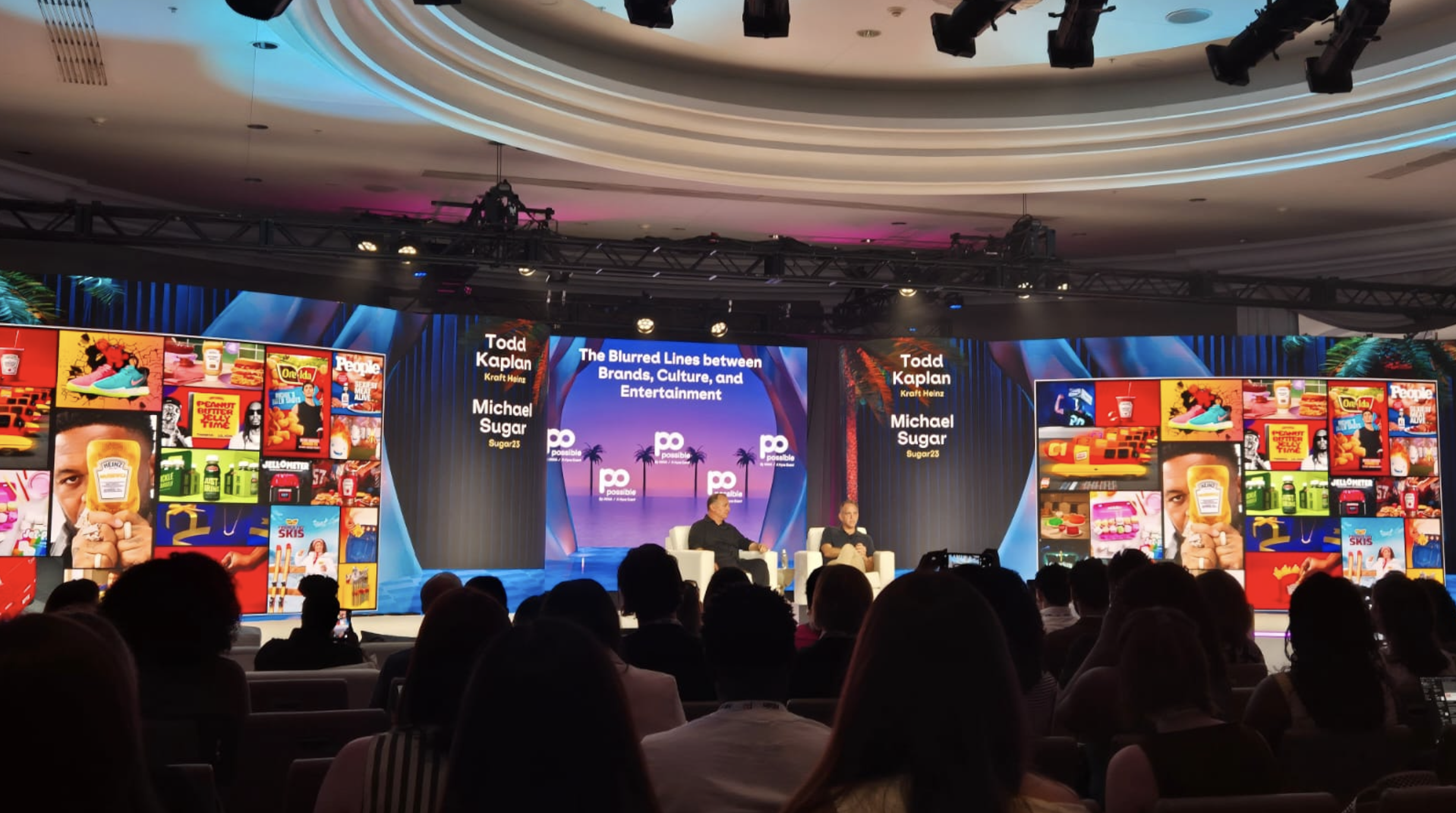
That's why one of the conversations at POSSIBLE about the role of emotion in purchasing behavior felt both uncomfortable and necessary. The problem isn't that brand love is fake. The problem is treating it as the destination when, in many cases, it's actually the outcome.
The Causal Chain We've Been Drawing Backwards
Positioning brand love as the objective follows an appealing logic: if people love me, they'll buy me. If they buy me repeatedly, I'll grow. Therefore, more love should mean more business. But the chain doesn't always work in that order.
La evidencia de efectividad de Les Binet y Peter Field The effectiveness research of Les Binet and Peter Field doesn't argue that emotion doesn't matter. It argues something far more precise: emotional communication works when it builds memory structures, salience, and mental availability that make future behavior more likely. The mechanism is behavioral from the very beginning.
Brand love, if it emerges at all, is often a signal that those structures have been built successfully—not necessarily the direct cause of business performance.
A brand that wins hearts but fails to change behavior eventually becomes an expensive decoration. And sooner or later, someone in the boardroom will notice.
What Changes When You Reframe the Question
Compare two briefs. The first says: “Strengthen the brand’s emotional connection with families through content that celebrates everyday moments at home.”
It could lead to work that is beautiful, well-crafted, and completely ineffective. The second says: “Recover purchase frequency among mothers aged 28 to 40 who already know us but are experimenting with lower-priced alternatives, by reinforcing trust in the days leading up to their weekly shopping trip and at the moment of decision in the aisle.” That brief has friction. It has a real business problem. It forces creativity to solve for a specific behavior at a specific moment.
The difference isn't that it sounds more sophisticated. It's that the second brief contains a target behavior, a defined audience, a moment of activation, and an emotion with a purpose. The resulting work can be just as emotional. In fact, it's often more powerful because it has something real to push against.
Being Ignored Is Worse Than Being Wrong
One idea repeated throughout POSSIBLE was brutally simple: in advertising, the greatest risk isn't always making a mistake. It's being ignored. A brand that generates an uncomfortable reaction has at least activated something.
A brand that creates indifference never even enters people's lives when it's time to make a decision. Relevance isn't declared.
It's earned in specific moments. And there is a level that very few brands ever reach: becoming part of culture. Not because it was written into an annual plan, but because the brand built a narrative so consistent that people chose to adopt it, debate it, reinterpret it, or defend it. That's also why fandoms matter in this conversation. They represent a concentrated version of what many brands ultimately want from their audiences: people who identify with what the brand stands for and defend it without being asked.
The Moment of Truth Can Undo Everything Media Built
Something often gets underestimated: the point of sale, the digital experience, perceived pricing, product availability, customer service, and friction throughout the purchase journey are all part of a brand's emotional system.
They do not exist separately. A financial institution can run a flawless, deeply human campaign and still require two weeks to open an account. A consumer goods brand can tell a powerful story and still lose customers in a chaotic store aisle. A retailer can talk about proximity and convenience while forcing customers to solve through WhatsApp what its website failed to solve. The emotional connection built through media can unravel in seconds.
The Discomfort Worth Leaving on the Table
En POSSIBLE, Manolo Arroyo de Coca-Cola At POSSIBLE, Coca-Cola's Manolo Arroyo de Coca-Cola sparked a broader conversation about how iconic brands remain human at scale and where technology genuinely unlocks creativity.
The takeaway for our region is clear: Before asking for love, brands should decide which behavior they want to make easier. Brand love, favorability, repurchase intent, and NPS are not useless metrics.
The risk appears when they are used as substitutes for behavioral indicators—or when they're treated as the destination rather than signals along the way.
The question isn't whether people love the brand.The harder question is: what do people do differently because of it? Do they buy more? Do they come back sooner? Are they less willing to switch to a competitor? Do they search for the brand by name? Do they recommend it when it matters? Do they defend its price?
Building brand love without knowing which behavior you want to drive is like having a fully equipped kitchen without knowing what you want to cook. This article is part of a series of strategic reflections following POSSIBLE, where Garnier Agency actively participated.
